
StoryCloud
Connected Routine System for Toddlerhood and Beyond
Developed as a next-stage ecosystem product extending Happiest Baby’s sleep, routine, and developmental insight platform beyond infancy.
Role
Product Concept Originator / Industrial Design / Product Architecture / Interaction Development / Prototype Engineering / Packaging Design
Scope
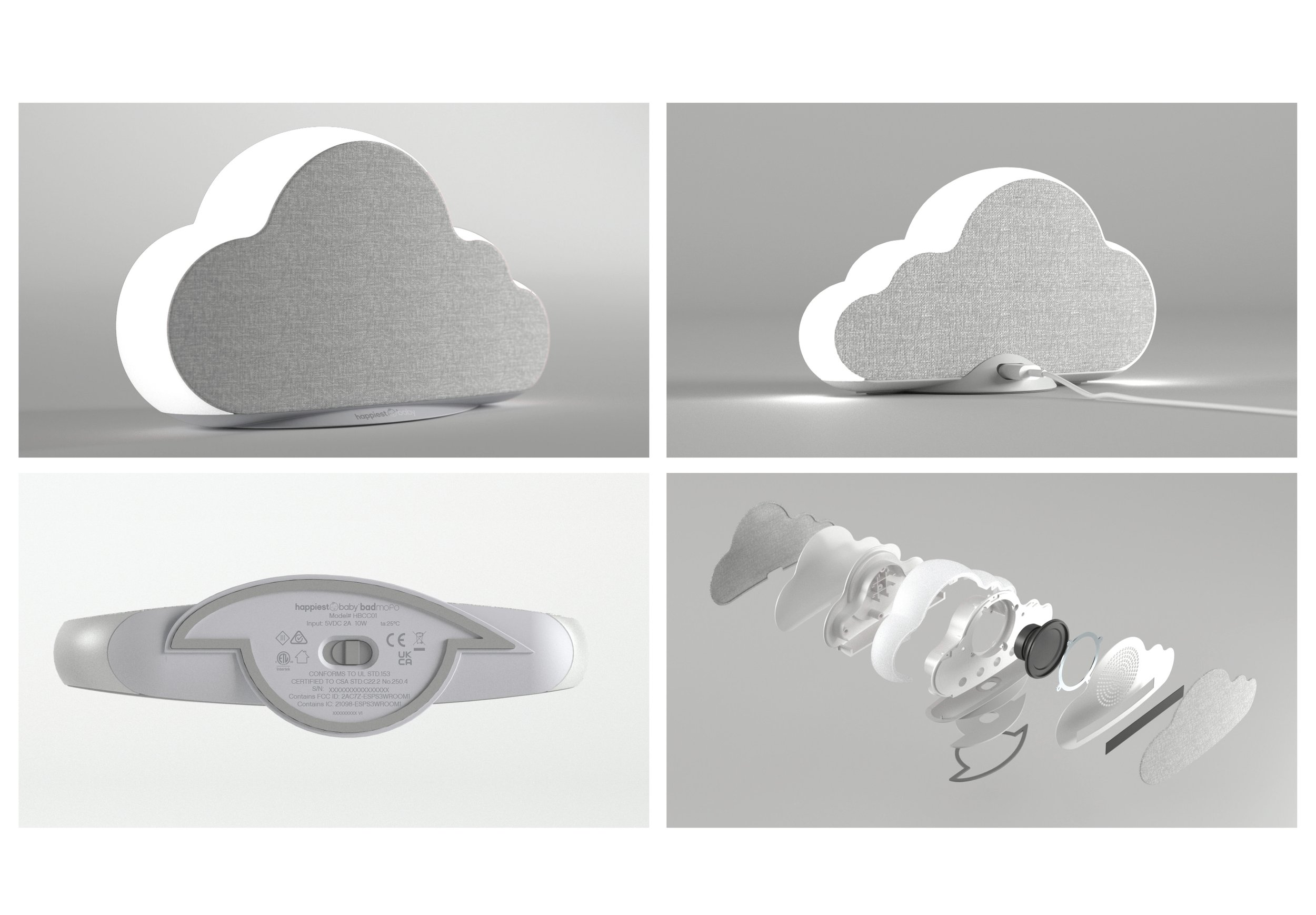
Hardware concept development, enclosure design, interface architecture, capacitive touch interaction, LED diffusion through textile, prototype development, app collaboration
Company
Happiest Baby, Inc.
Stage
Advanced prototype / Pre-production development
Impact
Developed as a next-stage ecosystem product intended to support families beyond SNOO use, reaching working prototype validation and pre-production maturity before cancellation due to COVID-related financial constraints
Leadership
Led industrial design, managed outsourced vendors, and worked closely with engineering partners to deliver the intended user experience.
Problem
Families often lose continuity once a child transitions out of infant-focused products like SNOO. Parents and caregivers need tools that help preserve healthy routines across developmental stages, multiple caregivers, and changing environments such as home and travel. At the same time, valuable behavioral signals around sleep, crying, and development are often lost or reduced to imperfect parental recollection, limiting their value for pediatric care, developmental monitoring, and research.Approach
StoryCloud was developed as a next-stage extension of the Happiest Baby ecosystem, supporting sleep and routines beyond infancy and into toddlerhood. It combined personalized storytelling, adaptive audio, calming light, and visual time cues in a portable connected product designed to help children move more smoothly through routines across home, travel, and different caregivers.Outcome
StoryCloud reached working prototype validation and was being prepared for mass production as part of a larger ecosystem roadmap. Early prototypes were placed with families for UX validation, with broader testing planned before the program was cancelled due to COVID-related financial constraints and shifting business priorities rather than limited product maturity or strategic value.Business Context
SNOO’s customer relationship naturally ended around six months, once a child outgrew the bassinet. StoryCloud was designed to extend that engagement into toddlerhood and early childhood.
It was part of a larger connected ecosystem including SNOO, the Smart Mobile, and the Smart Changing Pad + Scale, all contributing to a shared developmental logging platform.
The system addressed a key data challenge: how to capture meaningful behavioral insight from children too young to self-report.
The ecosystem was designed to log patterns in sleep, crying, weight progression, and developmental milestones, creating clearer records for families while also generating proprietary behavioral datasets that could create strategic value for Happiest Baby and support external research in pediatric health and early childhood development.


Key Features
Parent-recorded stories in any voice or language to preserve familiar routines even when another caregiver is present
AI-assisted storytelling that generated new stories in the parent’s recorded voice, expanding content while maintaining emotional familiarity
Gradual visual time cues using illuminated arcs that filled over time, helping children understand transitions and set expectations for routines
Support for routines beyond bedtime, including wind-down, story time, quiet play, and other daily transitions
Portable design for use at home or during travel, preserving consistency across environments
High-fidelity white noise and customizable audio to support calming, sleep, and routine-based use cases
Integrated microphone enabling caregiver voice interaction and sleep listening during the night
Adaptive response behavior that could detect crying and automatically begin white noise or stories based on caregiver-defined settings
Soft ambient lighting designed for calming, routine-setting, and night light use
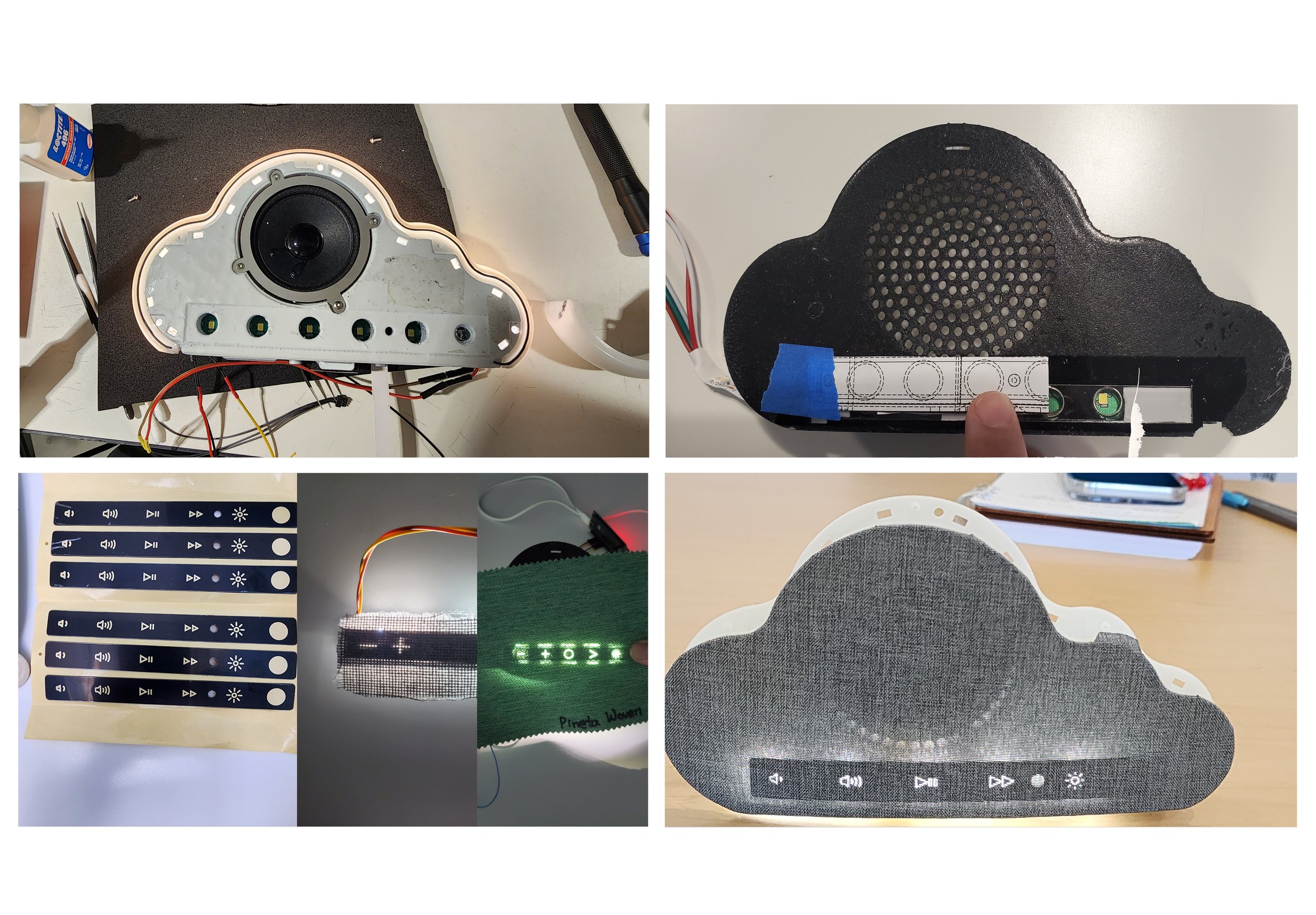
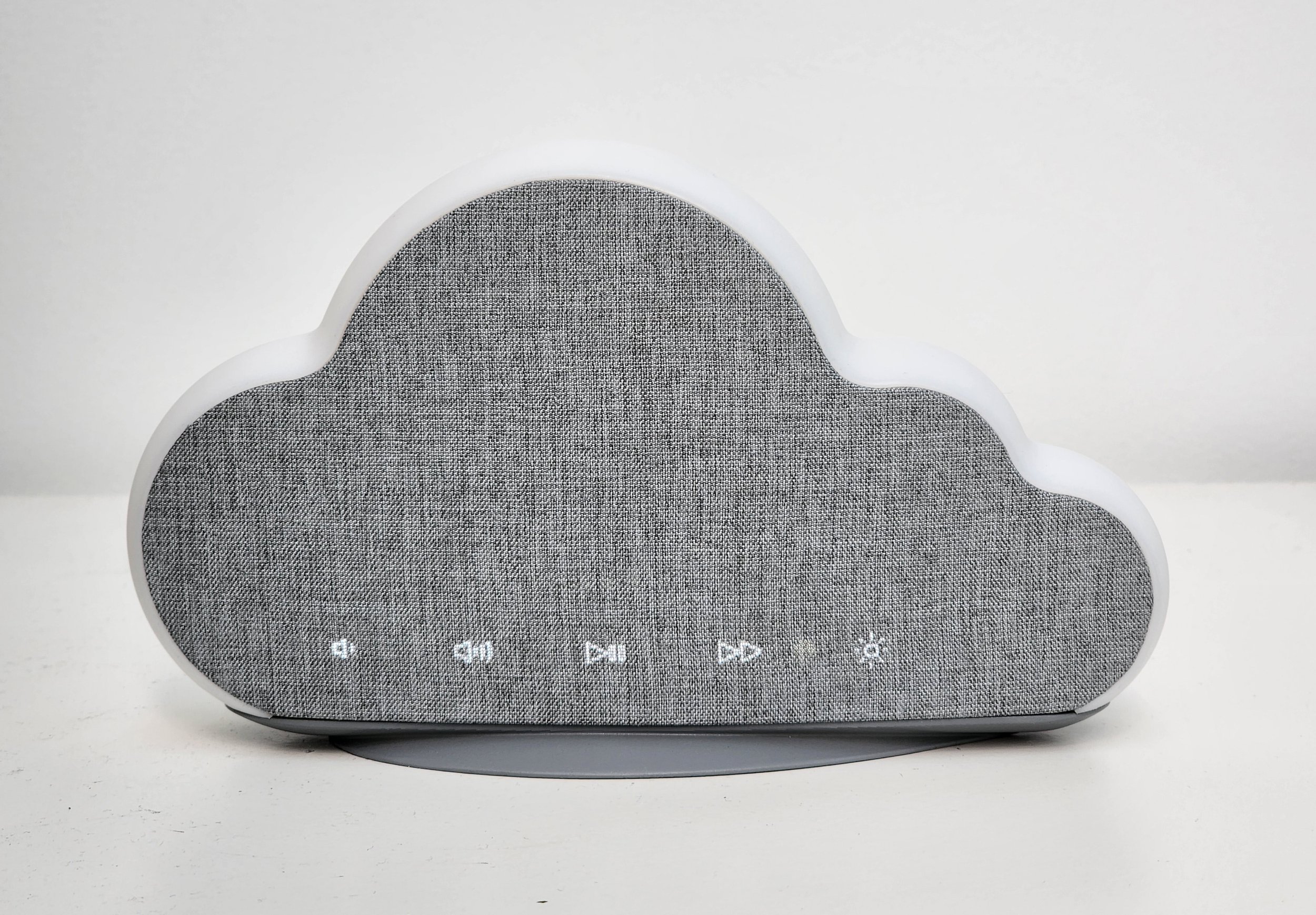
Proximity-activated capacitive touch controls that illuminated only when a hand approached, then faded out to maintain a clean, premium user experience
Development + Technical Execution
Advanced development included:
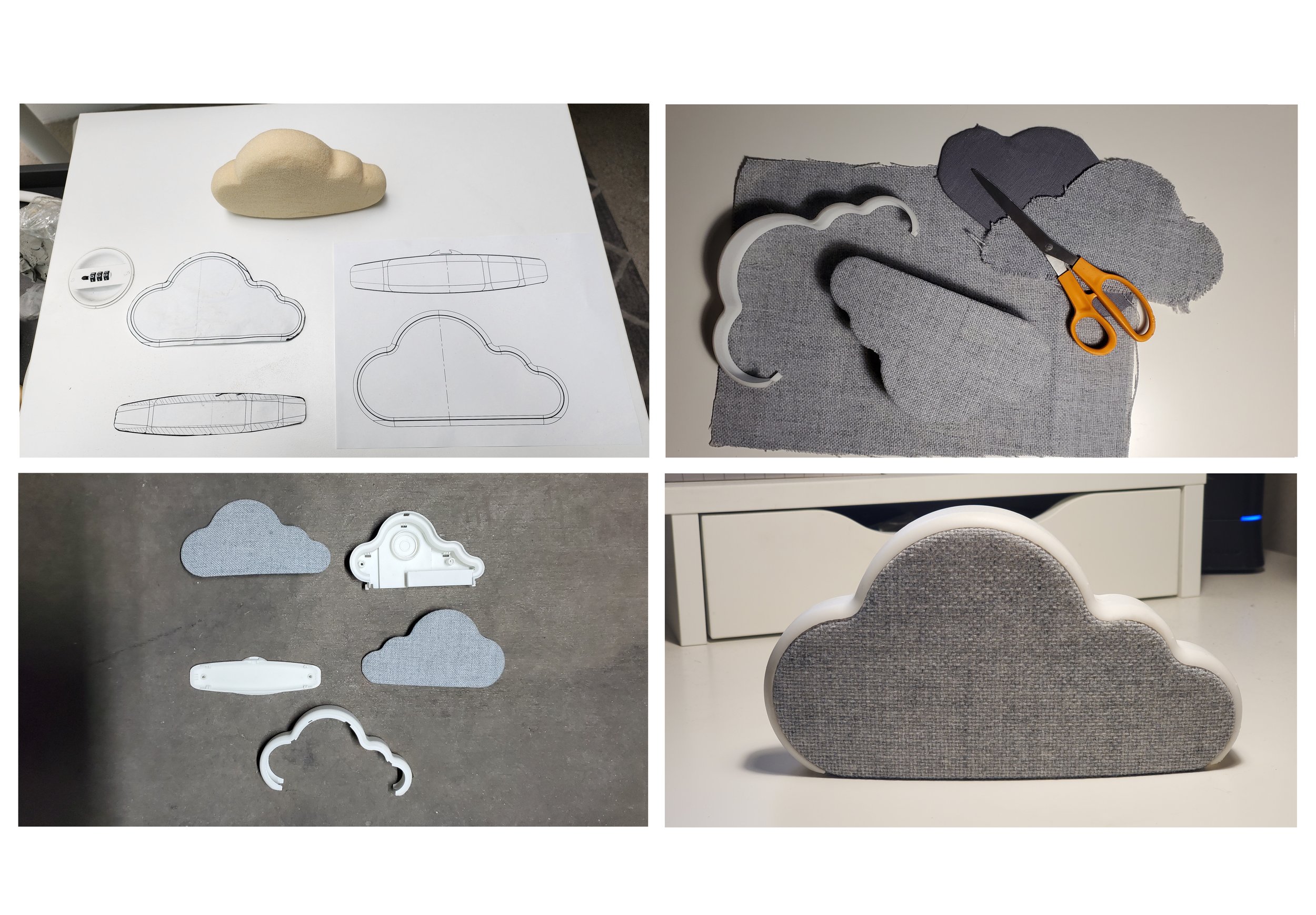
enclosure and internal component architecture
capacitive touch interface integration beneath textile
proximity sensing for hidden-control activation
LED diffusion studies through layered fabric interface
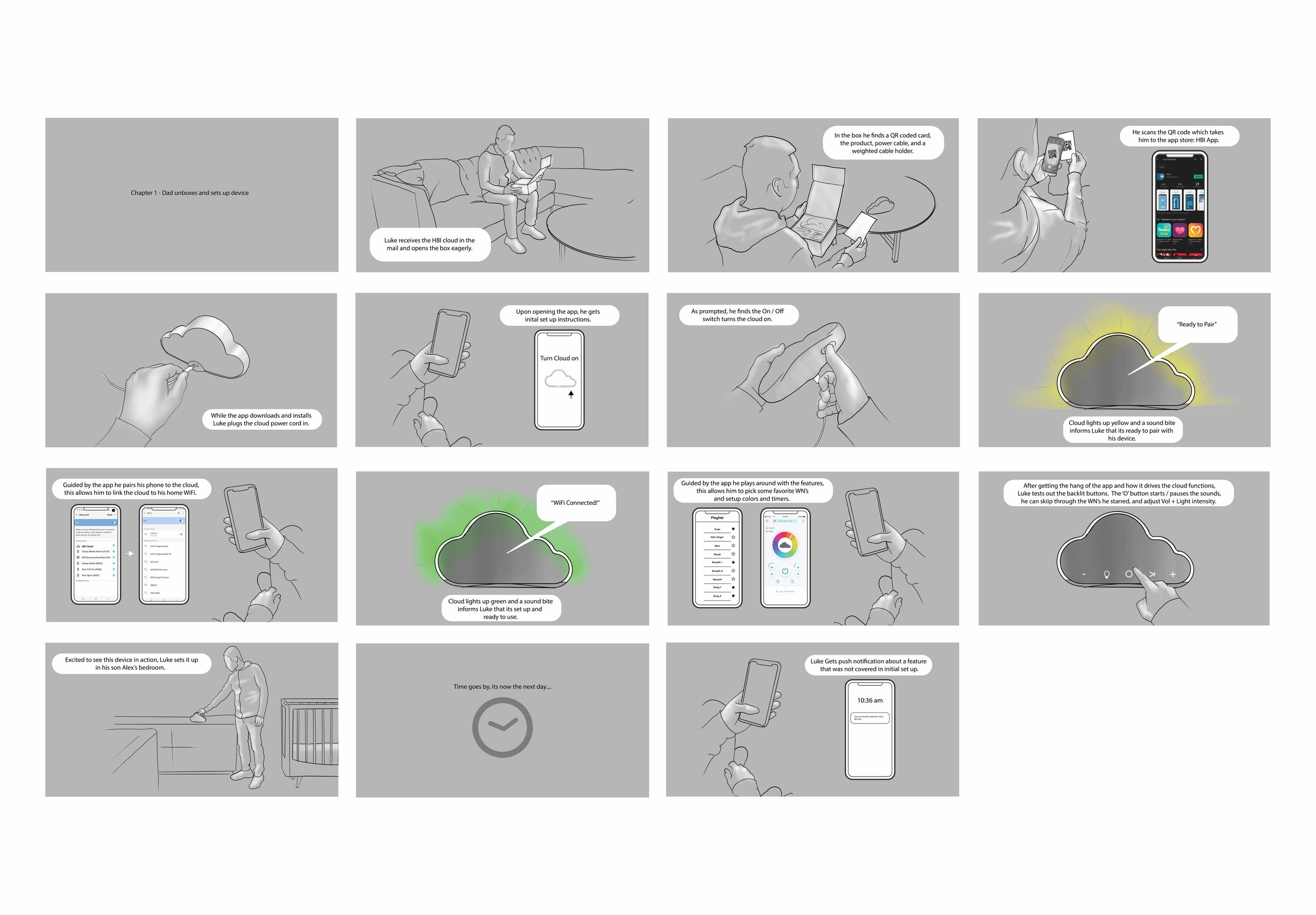
app-connected routine and content workflow integration
physical prototyping across housing, electronics, and textile systems
working prototype validation of interactive lighting and control behaviors
packaging + documentation design
regulatory implementations
The result was a working prototype that validated both the hidden interface strategy and the broader product interaction model
Hidden Interface Activation
A proximity sensor detected when a hand approached the device, causing the backlit controls to appear only when needed. Once the interaction was complete and the hand moved away, the controls disappeared again, preserving a cleaner design, a darker sleep environment, and a more premium, high-tech user experience.